

Jumping into it… (and as with all such posts, comments are open.)
John McWhorter on the fake “lynching” hysteria (plus more McWhorter)
I didn’t see this when I was writing my post on Thursday.
24 Sept 2026, NYT op-ed, John McWhorter: Are Lynchings Really Happening?
I could be cheap and say: check with Bettridge’s Law, but McWhorter didn’t title his own op-ed.
I have no intention of rebutting or commenting on his piece. I can only excerpt, for obvious reasons.
McWhorter’s open:
Since 2024, to judge from news reports, there have been at least 10 Black people found hanged in public in the United States. Eight of these cases have been officially ruled suicides or are being treated as such given no signs of foul play. In neither of the other two has a white suspect been named.
But many people harbor suspicions. Civil rights lawyers, pastors and family members (as well as myriad commentators on social media) have speculated that these deaths were lynchings — homicides perpetrated by whites to sow terror in Black communities.
And now Congress is getting involved. Representative Ayanna Pressley, Democrat of Massachusetts, cited those 10 recent deaths in a letter this month that called for a federal investigation into all hanging deaths of Black people in the country. (She also cited a report of 70 “modern-day lynchings” between 2000 and 2025, though the report uses “lynching” broadly to encompass a wide range of deaths, most of which do not involve hanging.)
My post on Thursday was about the disturbing high increase in suicides among Black Americans, especially young men/teens… but the largest increases were among firearm suicides. My point was entirely different.
Death by hanging is sadly common, with it and other forms of asphyxiation representing about a quarter of the suicides in the United States. When a white person is found hanged, the usual assumption is that the death was a suicide. The question is whether we should think otherwise when the person is Black.
….
In the cases Pressley’s letter cites, there is often good reason to think otherwise. Consider a few examples:
In 2024, Javion Magee, a 21-year-old Black truck driver, was found dead in North Carolina with a rope around his neck, dangling from a tree. There is surveillance video of Magee buying the rope.
In 2025, Demartravion Reed, a 21-year-old Black student at Delta State University in Mississippi, was discovered hanged from a tree on campus. Reed had sent his girlfriend suicidal text messages the night before.
….
Another reason is a belief that Black people don’t hang themselves because of the fraught historical associations with the act. “It is very uncommon for young Black men to commit suicide, let alone by hanging,” Raymond Winbush, a psychologist who has treated hundreds of Black men and boys, told The Washington Post.
“That’s not the way we do” is how Black Americans often put it in conversation. But we must ask, with all due compassion: Suppose it is? The cases in question are few in number. To say something is uncommon is to grant that it does happen sometimes.
McWhorter’s point is different from mine:
Of course, we want to acknowledge and thank the people who came before us, those who fought for the lives so many Black people now so comfortably lead. I understand the impulse to honor these predecessors by, as it were, cosplaying as them, battling again what they endured.
But I also suspect that those predecessors, looking at us now, would rather that we faced forward, not backward — just as they did.
My point: there is a serious problem with increasing suicide rates — which are occurring in multiple demographic groups.
I just happened to focus on young Black men in that particular post. In other posts, it’s middle-aged women, veterans, or older men in general.
Happier McWhorter
I’ve been a McWhorter “fan” for decades — I’ve enjoyed his lectures at the Teaching Company/Great Courses. His specialty is linguistics, and he’s got courses/material extending from a deep dive into linguistics to a more “popcorn” version.
Most people can get access to Great Courses lectures via library services, such as via kanopy, or you can access via Audible.com. I recommend the “Language A to Z” as one of the “popcorn” courses, because you get a little taste of the bigger topics, and you can really get an idea — because he also wrote books on linguistics, but it’s tough to write books about topics like tonal languages and click languages… but it’s a lot easier in audio/video lectures.
But to cut to the chase, here is a very short explanation of the weird plurals in English:
Here is a fun book he wrote on English: Our Magnificent Bastard Tongue: The Untold History of English [thank you, Amazon, for reminding me I bought a paperback copy back in July 2009]

A survey of the quirks and quandaries of the English language, focusing on our strange and wonderful grammar
Why do we say “I am reading a catalog” instead of “I read a catalog”? Why do we say “do” at all? Is the way we speak a reflection of our cultural values? Delving into these provocative topics and more, Our Magnificent Bastard Language distills hundreds of years of fascinating lore into one lively history.
Covering such turning points as the little-known Celtic and Welsh influences on English, the impact of the Viking raids and the Norman Conquest, and the Germanic invasions that started it all during the fifth century ad, John McWhorter narrates this colorful evolution with vigor. Drawing on revolutionary genetic and linguistic research as well as a cache of remarkable trivia about the origins of English words and syntax patterns, Our Magnificent Bastard Tongue ultimately demonstrates the arbitrary, maddening nature of English— and its ironic simplicity due to its role as a streamlined lingua franca during the early formation of Britain. This is the book that language aficionados worldwide have been waiting for (and no, it’s not a sin to end a sentence with a preposition).
He’s written lots of books — fun and not-so-fun.
If I remember correctly, McWhorter’s specialty is creoles, so understanding how the various Norsemen (not only the Normans, but the Viking Danes) screwed around with (literally and figuratively) the Anglo-Saxons knocked the various “difficult bits” off of Old English to end up with the relatively “simple” language we’ve got today.
The Pope in France
I generally do my daily rosary by reciting along with the folks in Lourdes (check out their channel), so I knew the Pope was coming because they kept mentioning it for weeks. Amusingly, from that channel, you’d barely know that the Pope was there, as the video from his visit is just mixed in with all the other videos.
So I will share one of the videos from the visit — it was a youth prayer vigil in Paris, and I’ve linked the video to start to a pageant of the saints:
Yes, sorry, a translator/commentator is talking over the activities, but he doesn’t translate everything.
I understand French un peu, and I recognized the names (and the costumes) of many of the saints in the pageant, and I noticed he didn’t name, for instance, John Vianney.
It is remarked that France is the country that has the second largest number of recognized saints in the Church, but I don’t think he mentions the reason:
the French Revolution.
I’m sure the authors of the Reign of Terror would love to have seen the throngs along the Champs-Élysées, with a mass at Place de la Concorde…
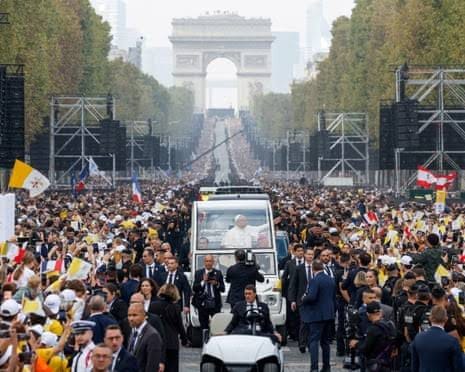
I mean, none of that architecture existed at the time of the Revolution, but to know that the Catholic Church endured, the French state is on its Fifth Republic (hey, maybe a sixth is on its way), and for all the nuns and priests they murdered…
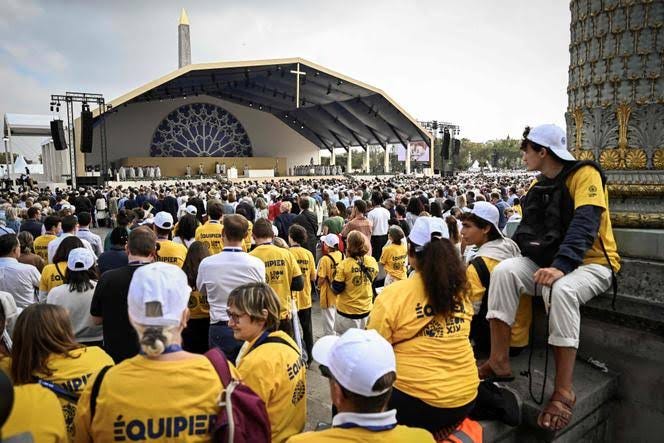
Oh, they’re canonized. And the people of Paris are feting the Pope.
Oh, he’s not Italian, and has a French background of sorts, but he’s from the Americas.
Wonder what they would have thought of the fruits of various revolutions of the centuries.
The T.V. Bishop: Life is Worth Living
Speaking of Catholic doings, on Thursday, Archbishop Fulton Sheen was beatified in St. Louis (speaking of the French), Missouri.
As with the papal visit to France, I enjoyed the ceremonies from couch, and you can watch it via various recordings (particularly EWTN).
But let me share some remarks from my ex-archbishop, Cardinal Dolan:
Rather than sully the warm feelings from the beatification, let us not discuss why this happened in the Midwest rather than New York City, where it should have been. That can be talked about another time…. and really, New York doesn’t deserve it, because it can’t be trusted, for good reason.
Moving on, I have my grandfather’s copy of Life is Worth Living, and I wrote about this before:
The Week in Meep: Pain, Sheen, and EARTHQUAKE.
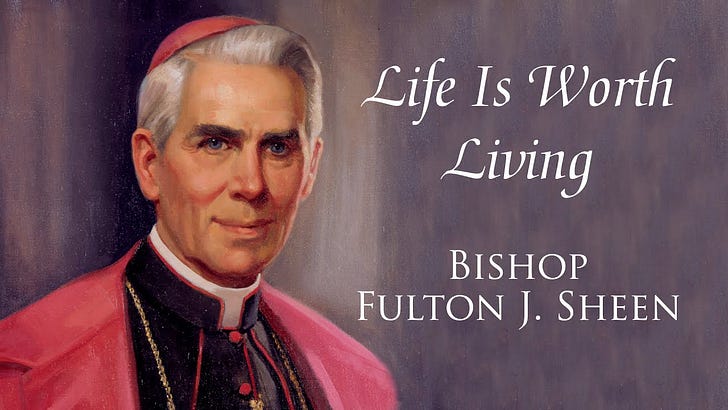
Yeah, I didn’t get to more posts this week, though I do have some comments to make on this news:
I had bad pain this past week, and the beatification ceremony on Thursday was a helpful reminder.
STORMS IN ART!
We had a big storm recently… so here is some art.
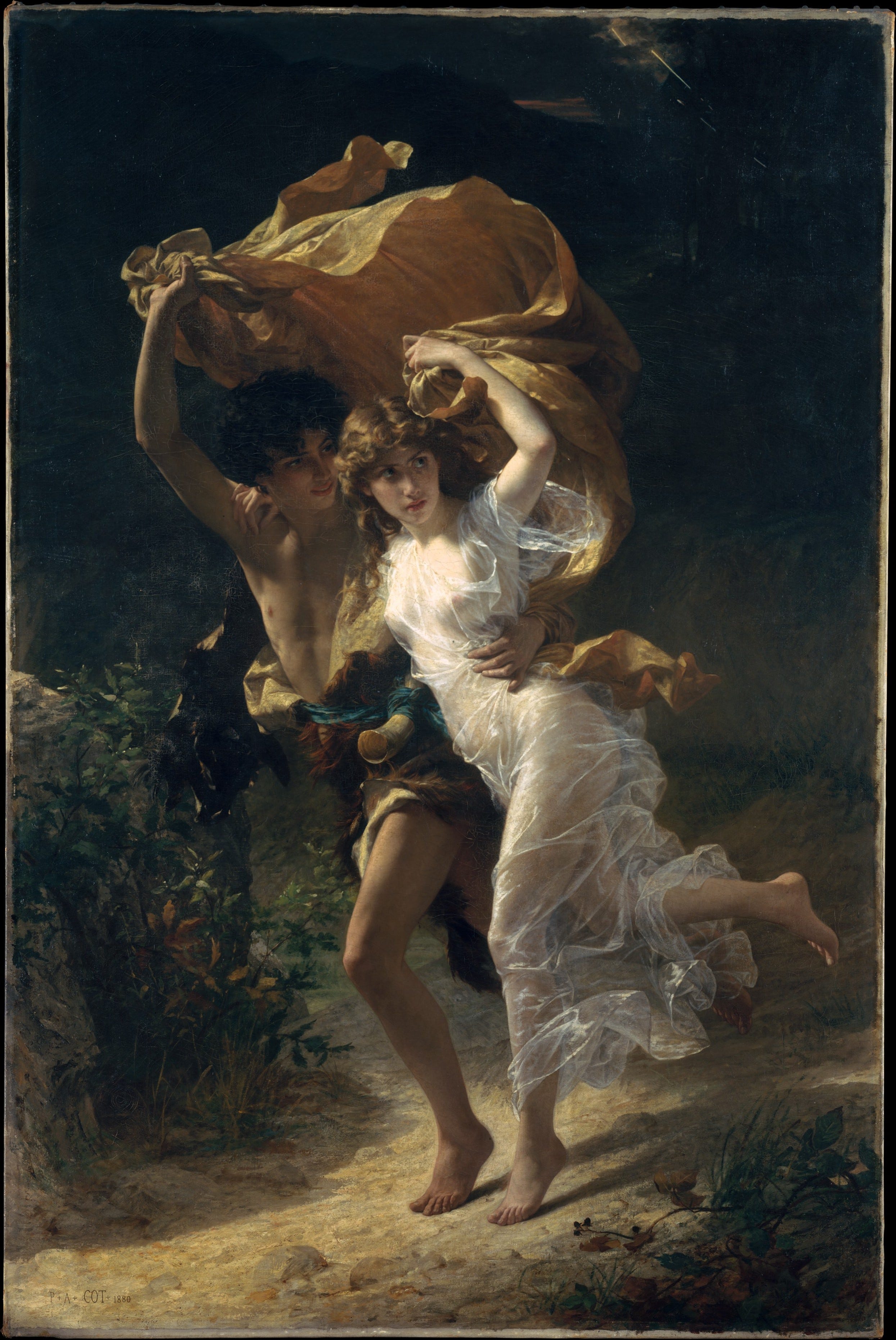
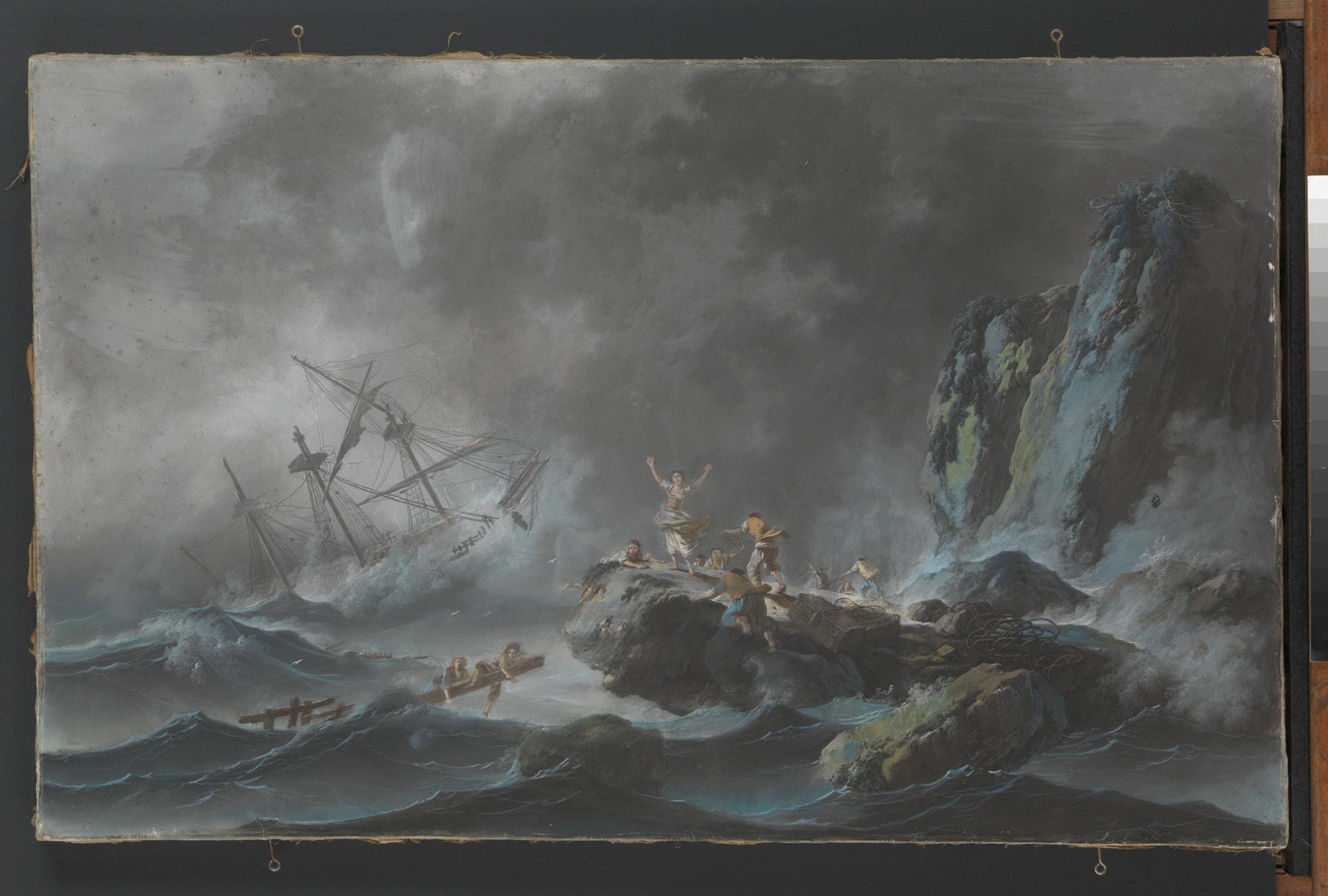
I have used the colors from this painting, from the MetBrewer package and palettes. It is somewhat dark, but I like that moody look.
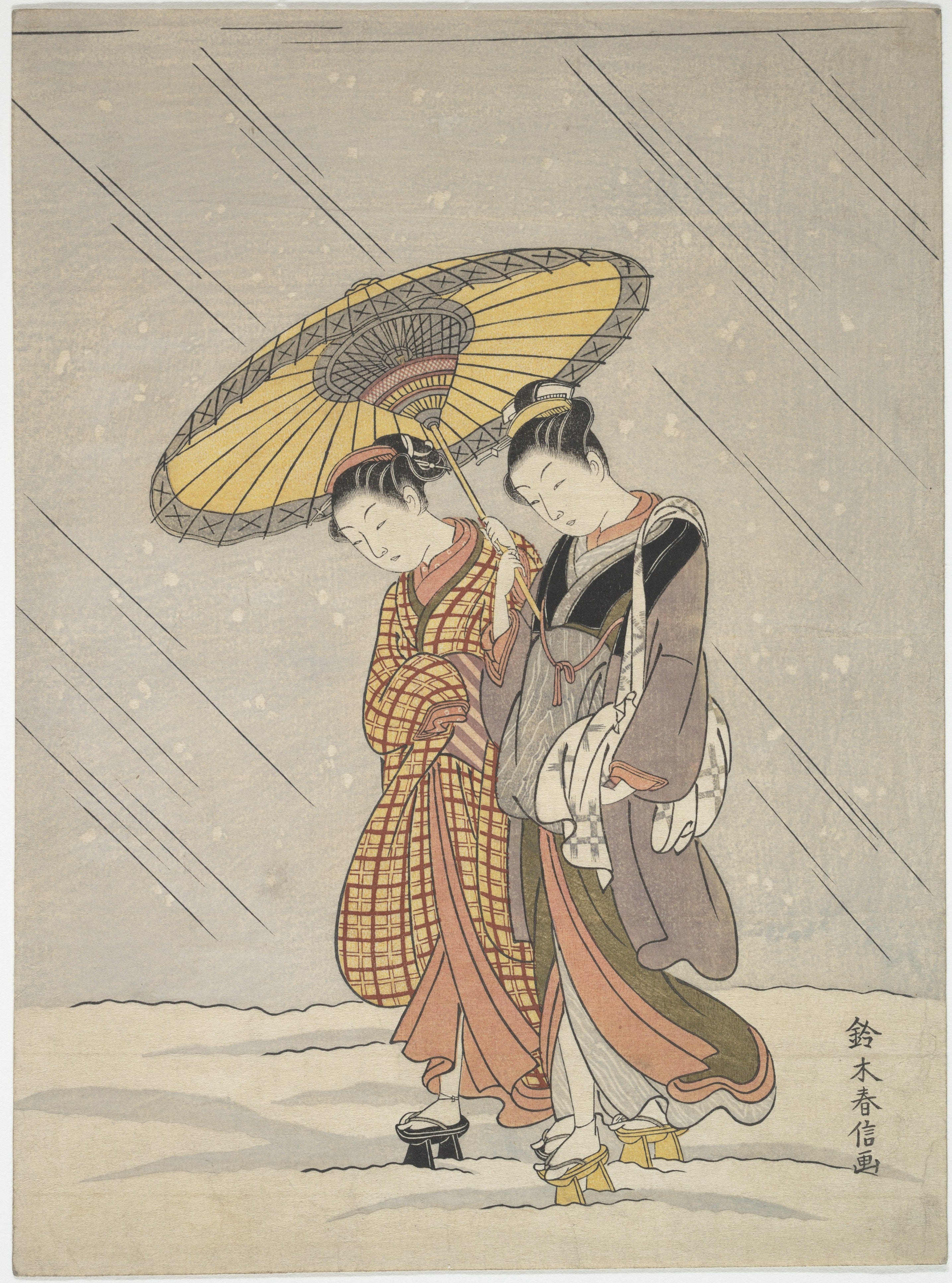
This last one reminds me the Grand Sumo Tournament for September ended today… but I’m not commenting on that til next week, to give others to catch up on their viewing.
Ganbatte!